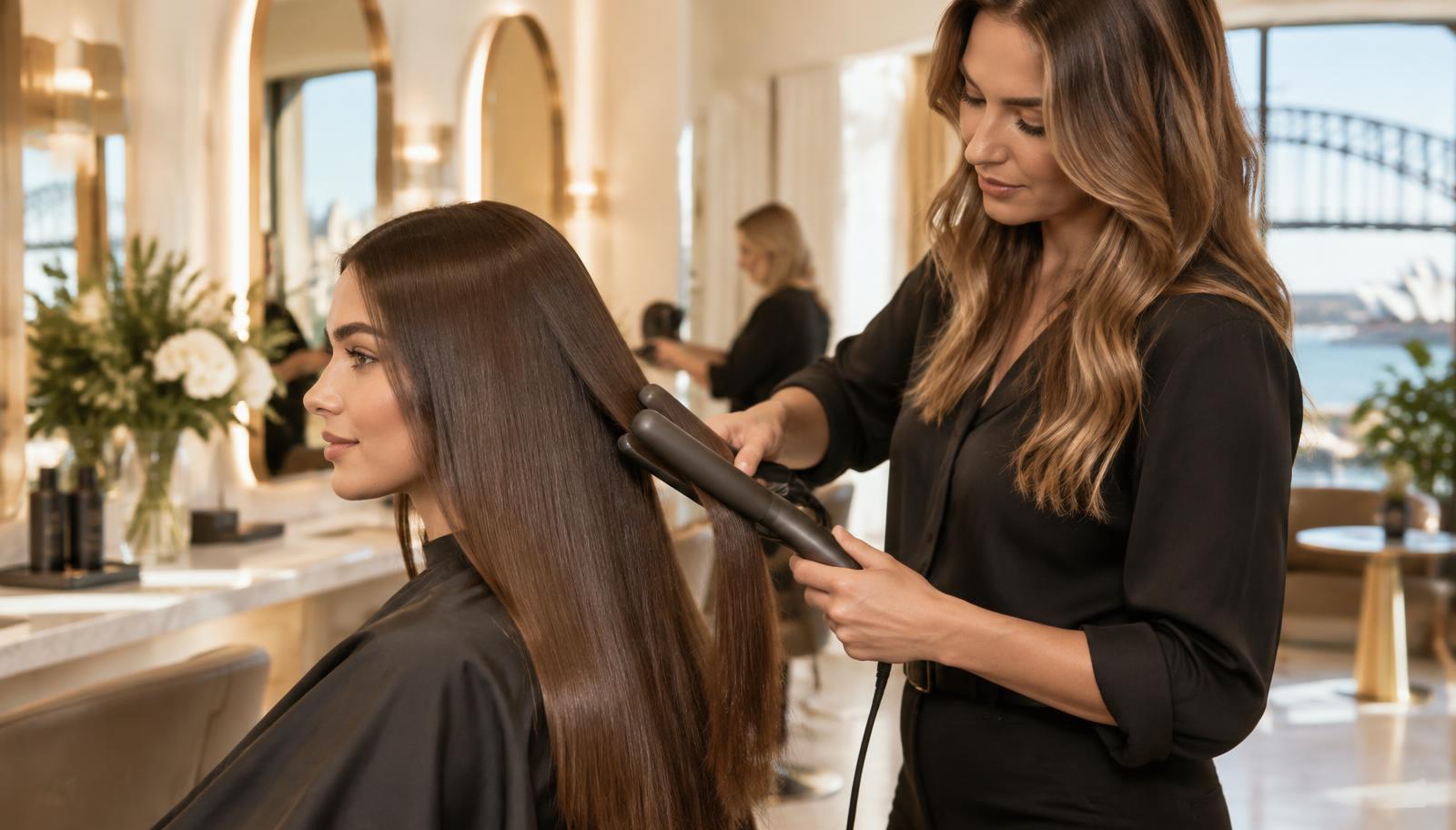
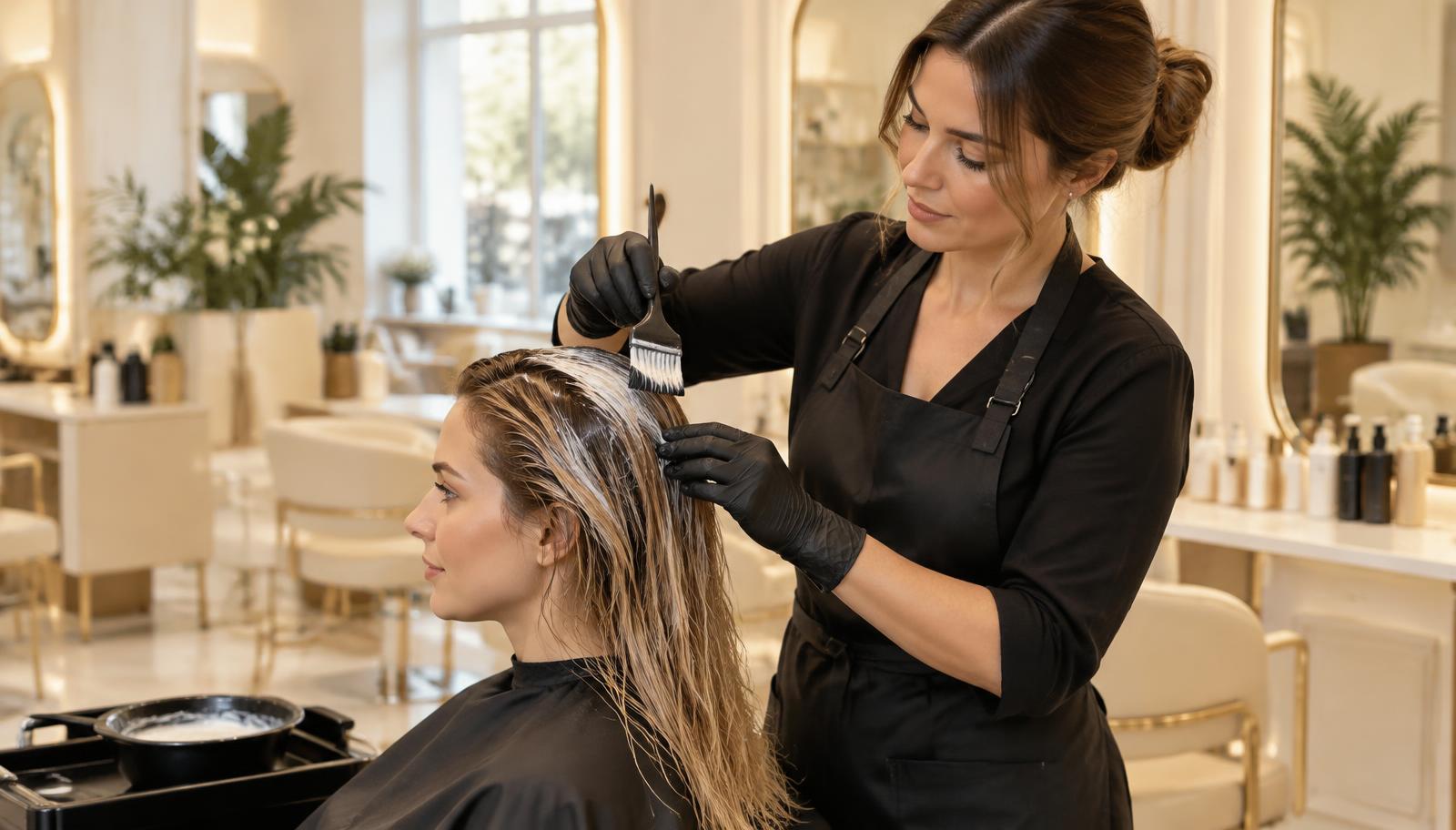
Key takeaways
- ✦Keratin is the protein hair is made of; “keratin treatment” is a commercial name for professional smoothing.
- ✦A nanoplasty formula containing hydrolysed keratin can accurately be called a keratin treatment.
- ✦What matters is formaldehyde-free chemistry, correct processing and thermal sealing.
- ✦Use “keratin treatment” on your menu alongside nanoplasty so clients recognise the service.
What “keratin treatment” really means
Hair is about 90% keratin. Professional smoothing services that deposit hydrolysed keratin and other actives, sealed with heat, are sold as keratin treatments. Many modern nanoplasty formulas also contain hydrolysed keratin — which is why the names overlap so much in clients’ minds.
Keratin and nanoplasty: same family, different marketing
Rather than positioning one against the other, professionals do best explaining that these are names within one service category. What changes the result is the active chemistry, raw-material quality, processing time and thermal sealing — not the word on the bottle.
Formaldehyde-free keratin in Australia
Australian salon clients increasingly ask whether a keratin treatment is formaldehyde-free. After the ACCC’s actions over mislabelled smoothing products, being able to show documentation is a real competitive advantage for your salon.
What should a keratin consultation ask about the client's ordinary week?
A keratin consultation should connect the proposed smoothing service to the client's ordinary week, not only their desired salon photograph. Ask how often they wash, whether they air-dry, which sections are hardest to manage and how much time they currently spend styling. These details turn a broad request for smoother hair into a practical brief.
Discuss work, exercise, swimming and regular colour appointments. A client who ties their hair up for outdoor work may have different priorities from someone who styles a polished bob every morning. Ask what they like about their existing texture as well as what they want changed. Explain that keratin and nanoplasty are names within the same professional smoothing category, so the consultation matters more than choosing between those labels.
Write down the desired level of movement, the client's tolerance for a change in curl pattern and their expectations after air-drying. Establish the full chemical history and whether a separate strand-test appointment is needed. Finish by explaining the provisional scope and price, including maintenance costs. This gives the client a chance to consider the whole service before committing a large block of time.
How should stylists interpret porosity before a keratin appointment?
Porosity should be interpreted alongside chemical history and direct assessment, not as a single label that determines the entire appointment. Examine regrowth, mid-lengths and ends separately, including areas around the face and crown. A smooth-looking surface after a blow-dry can conceal important differences between natural and previously lightened hair.
Ask about highlights, balayage, darker colour applied over bleach and colour-removal work. Record uncertainty rather than filling gaps with assumptions. Where the hair differs substantially by area, select representative strands for assessment under the relevant professional guidance. The oldest ends may have a very different history from the newest growth, even when the client describes their hair as simply coloured.
Follow the Vitta Gold Education Manual for exact testing and service protocol. Use the assessment to decide whether the proposed appointment is appropriate, not to justify proceeding at any cost. If the hair does not support the service, explain the reason in straightforward language and offer a separate planning conversation. Avoid promising that an immediate conditioning step will make every head suitable for chemical smoothing.
How can a salon coordinate keratin smoothing with blonde maintenance?
Keratin smoothing and blonde maintenance should be coordinated through a shared plan that accounts for previous lightening and future colour goals. Ask when the last highlights or bleach application took place and which areas were treated. Include toning, face-framing lightening and major shade changes rather than treating them as minor details unrelated to smoothing.
Explain that the visible colour may change during the service and use strand testing to inform expectations. A test helps the conversation but does not guarantee identical behaviour across every section. Discuss the client's preferred shade before booking and note whether an upcoming event makes colour consistency especially important. Where another colourist is involved, encourage clear sharing of the relevant service history.
Follow the Vitta Gold Education Manual for the smoothing protocol and obtain the appropriate professional guidance for scheduling colour. Do not publish one waiting interval as suitable for every combination of services. Quote the planned appointments transparently so the client can budget for the full sequence. Coordinating the work beforehand is more useful than trying to fit an unplanned colour correction into the end of a long smoothing appointment.
What does an honest keratin conversation sound like for curly hair?
An honest keratin conversation explains that smoothing may alter curls and that improved manageability does not guarantee the original pattern will remain unchanged. Ask whether the client wants to wear curls regularly or mainly wants a straighter styling routine. Establish how much reduction in movement or volume they would actually welcome.
Use the client's own photographs to explore the difference between frizz, definition, shrinkage and density. These concerns can overlap, but they do not mean the same thing. A client who enjoys their silhouette may regret a finish designed around someone else's preference for flatter hair. Explain the difference between the styled salon result and what can reasonably be discussed about washing and air-drying at home.
Assess representative strands and follow the Vitta Gold Education Manual when deciding whether the brief is supportable. Do not promise exact curl retention or improvise a technique by arbitrarily changing time, temperature or passes. If retaining the existing pattern is essential, discuss other styling and home-care approaches. The consultation succeeds when the client makes an informed choice, including deciding that chemical smoothing is not the right service for them.
How should sectioning and thermal records support consistency?
Sectioning and thermal records should make the prescribed keratin service easier to execute consistently and review afterwards. Divide the hair into manageable working areas suited to its density and the required technique. Longer hair is not automatically the most labour-intensive; a shorter, denser head can require more subdivisions and careful handling.
Prepare the station and establish who is responsible for each stage before starting. If an assistant joins the appointment, hand over the assessment findings, mapped areas and completed work. Keep the client's record available so relevant details are not lost during a busy changeover. Note the prescribed settings and technical observations in a way another trained stylist can understand.
Follow the Vitta Gold Education Manual for exact section size, application, preparation, processing, rinsing, drying and thermal work. Do not substitute a generic temperature or universal pass count from another service. Never use larger sections simply to recover time lost elsewhere in the diary. A realistic booking allows the team to complete the protocol, finish the hair and explain home care without turning the final stages into a rush.
How can keratin pricing explain value without promising a perfect result?
Keratin pricing should explain the assessed work and professional time rather than promise perfection or a fixed lifespan. As an illustrative menu structure, a salon might plan AUD $250–$420 for a less complex appointment and AUD $420–$700 or more for longer, denser or technically demanding hair. These are indicative planning examples, not verified national averages or guaranteed charges.
Calculate the salon's actual figures from product usage, paid labour, overheads and the appointment allowance. Include consultation, testing where required, preparation and finishing. Explain whether home care is included and whether a consultation fee is credited towards treatment. Clients should understand the confirmed total before the service begins, including the cost of any separately planned colour appointment.
Use clear criteria rather than vague labels such as standard and premium without explanation. Operating costs in Sydney, Melbourne, Brisbane, Perth or Adelaide may differ, but each business needs its own calculation. Avoid selling a longer-lasting guarantee as an upgrade. Results are typically three to six months, with variation according to the hair, technical execution and maintenance. A transparent quote establishes value more credibly than an absolute promise.
What keratin aftercare suits humidity, swimming and outdoor living?
Keratin aftercare should combine suitable low-sulphate home care with advice matched to humidity, swimming and outdoor exposure. Ask the client how their week actually works before recommending a routine. Explain product directions and provide written guidance for any first-wash or styling requirements under the prescribed protocol.
Humidity in Sydney and Brisbane can influence expectations about daily styling, while Gold Coast and Darwin clients may combine humid weather with frequent pool visits. Discuss chlorine and salt water without implying the service makes hair unaffected by either. Fresh-water rinsing, a suitable swim cap where practical and prompt care after swimming can form part of a realistic routine guided by relevant product instructions.
Include hats and shade in discussions about prolonged UV exposure, especially for clients maintaining colour. Perth beachgoers, outdoor workers in Adelaide and holiday travellers from Melbourne, Canberra or Hobart may need similar planning despite different home climates. Do not prescribe a wash schedule based solely on postcode. The useful routine is one the client can follow consistently, and no maintenance plan guarantees an identical result for every person.
How should salons handle the first review and future rebooking?
The first review should compare the client's real-life experience with the consultation brief and the documented starting point. Keep authorised before-and-after photographs, assessment notes and product details together. Record whether the finished photograph shows blow-dried hair, because a later air-dried photograph is not a like-for-like comparison.
After the client has followed the prescribed first-wash guidance, ask about brushing, movement, manageability and the areas they found difficult before treatment. If they report an unexpected result, arrange a considered assessment rather than diagnosing the issue through a single message. Review home care, chemical history and the technical record before proposing any further service. Another application or additional heat should not be the automatic response.
Plan the next visit around reassessment. Results are typically three to six months, but new growth, retained smoothing through the lengths and upcoming colour work affect the appropriate timing. Update the brief when the client returns: someone who previously wanted a sleek finish may now want more movement. Rebooking should provide a fresh decision and confirmed quote, not an assumption that the previous service remains suitable unchanged.
Helping local clients find your keratin service
List “keratin treatment”, “keratin smoothing” and “nanoplasty” on your Google Business Profile, add a page explaining the service, and ask happy clients to mention the treatment and suburb in their reviews.
Frequently asked questions
Is nanoplasty a keratin treatment?
A nanoplasty formula containing hydrolysed keratin can accurately be called a keratin treatment. Both are commercial names within professional chemical smoothing.
How long does a keratin treatment last?
Professional smoothing typically lasts three to six months, depending on hair type, technique and home care.
Does a keratin booking include colour correction?
Not unless the salon has assessed, planned and quoted that work separately. Discuss colour goals before booking and follow the relevant guidance for sequencing. Do not assume that a toner or another colour service can always be added to the end of the smoothing appointment.
Can clients bring photographs to a keratin consultation?
Yes. Photographs help explain preferred movement and shape, especially when they show the client's own hair. Discuss whether the reference is blow-dried, ironed or air-dried. A photograph is a communication tool, not a guarantee that another person's result can be reproduced on different hair.
Should keratin appointments have one fixed price?
A fixed price can work only if the salon defines its scope clearly and costs it sustainably. Many businesses use assessed quotes based on density, length and technical complexity. Explain inclusions and any home-care costs before starting so the client understands the full commitment.
Can a client use their existing shampoo after keratin smoothing?
Review the actual product rather than assuming it is suitable from its marketing description. Recommend appropriate low-sulphate home care and explain the relevant directions. Avoid promising that one shampoo alone determines longevity; washing habits, swimming, styling and the original service also influence maintenance.
When should a returning client receive another strand test?
Reassess the history and current hair at every visit, especially after new lightening, another chemical service or an uncertain change in condition. Follow the Vitta Gold Education Manual for testing requirements. A successful previous appointment does not establish that the hair is unchanged or automatically suitable now.
References & further reading
- Vitta Gold Academy — Nanoplastia vs keratin vs hair botox: what actually differs
- Vitta Gold Academy — Formaldehyde-free keratin treatment
- Gavazzoni Dias MF. Hair cosmetics: an overview. International Journal of Trichology, 2015 (PMC4387693)
- ACCC Product Safety Australia — ‘Brazilian Blowout “formaldehyde-free” representations likely to mislead’ (2011)
- U.S. Food & Drug Administration — Hair smoothing products that release formaldehyde when heated