Key takeaways
- ✦“Nanoplasty”, “keratin”, “Brazilian smoothing” and “hair botox” are commercial names inside one category: professional chemical hair smoothing.
- ✦What really differs is the active chemistry — formaldehyde-free actives such as amino acids and glyoxylic acid versus formaldehyde and its releasers.
- ✦A full professional service takes about two to four hours, with 40–60 minutes of processing, and typically lasts three to six months.
- ✦Australia’s regulator, the ACCC, has acted against straightening products falsely labelled “formaldehyde-free” — documentation matters.
- ✦Vitta Gold professional straightening is supplied locally in Australia by Elasta.
One category, many names
Clients use “keratin”, “Brazilian”, “nanoplasty” and “smoothing” interchangeably — and they are not wrong. These are commercial names, not chemical categories. A nanoplasty formula that contains hydrolysed keratin can accurately be called a keratin treatment; one built on hydrolysed proteins can be called a protein treatment.
For your salon this is an opportunity: list every name your clients use on your service menu, website and Google Business Profile, then let the consultation decide the finish.
- Nanoplasty / nanoplastia
- Keratin treatment / keratin smoothing
- Brazilian hair straightening / Brazilian smoothing
- Hair smoothing treatment / permanent hair straightening
How professional straightening works in the hair fibre
Hair is roughly 90% keratin — protein chains held together by hydrogen, ionic and disulfide bonds. Frizz and unwanted volume are, in structural terms, a disorganised cuticle and a cortex holding the fibre in an irregular shape.
Modern professional straightening uses low-molecular-weight actives — amino acids and hydrolysed proteins — that enter the cortex and reorganise the cuticle. The fibre is aligned while those actives are mobile, and controlled flat-iron heat fixes the new alignment. Because it acts on cortex and cuticle together, the finish can be fully adjusted: 100% straight, a natural anti-frizz finish with movement, or defined curls.
The professional protocol, at a glance
Every line has its own manual — follow it. The overall structure of a professional service is:
- Diagnosis: porosity, elasticity, previous chemistry and a strand test
- Pre-treatment wash with a cuticle-opening shampoo
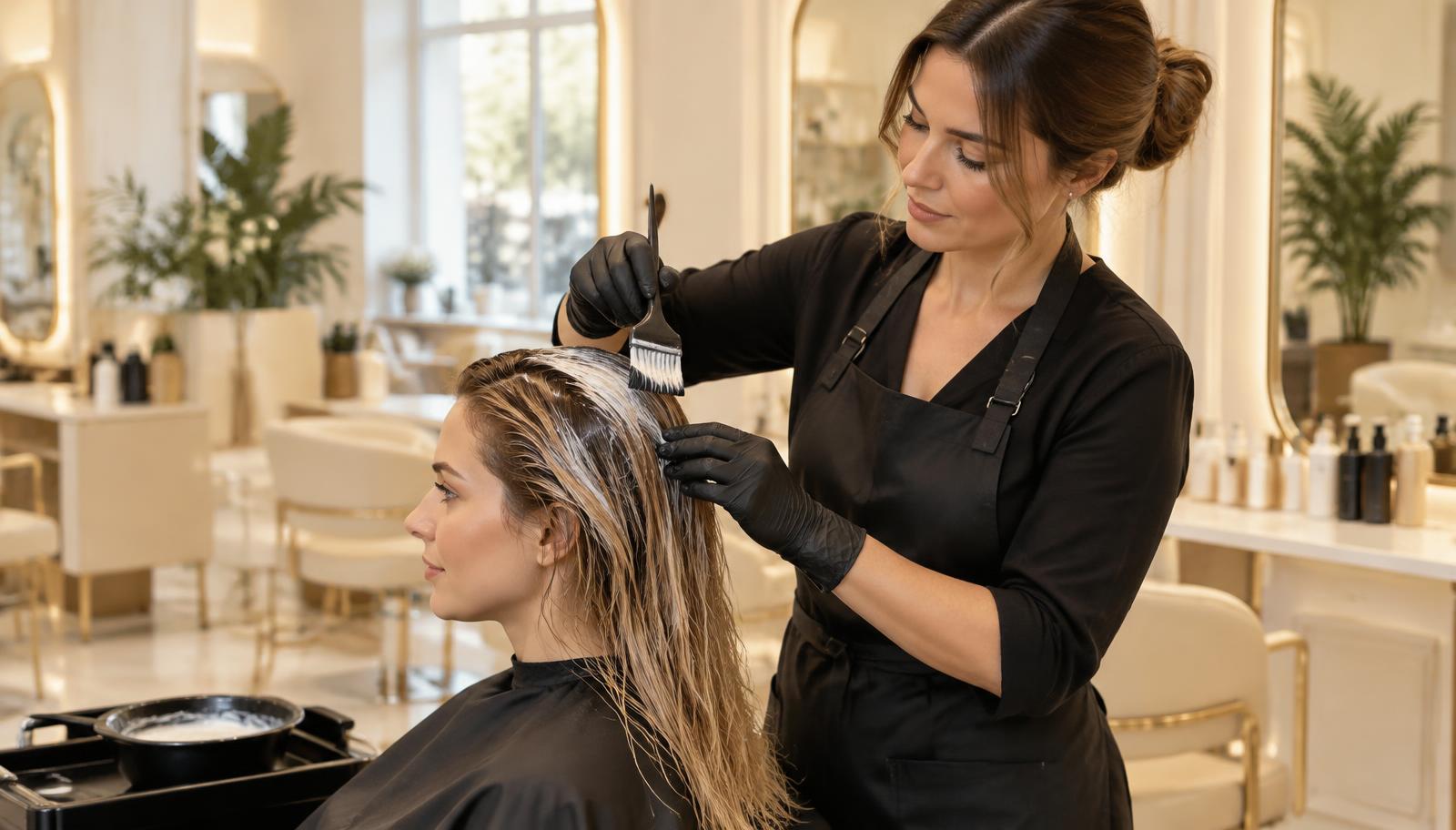
- Section-by-section application
- Processing for 40–60 minutes once fully distributed — never cut short
- Rinse and blow-dry 100% dry
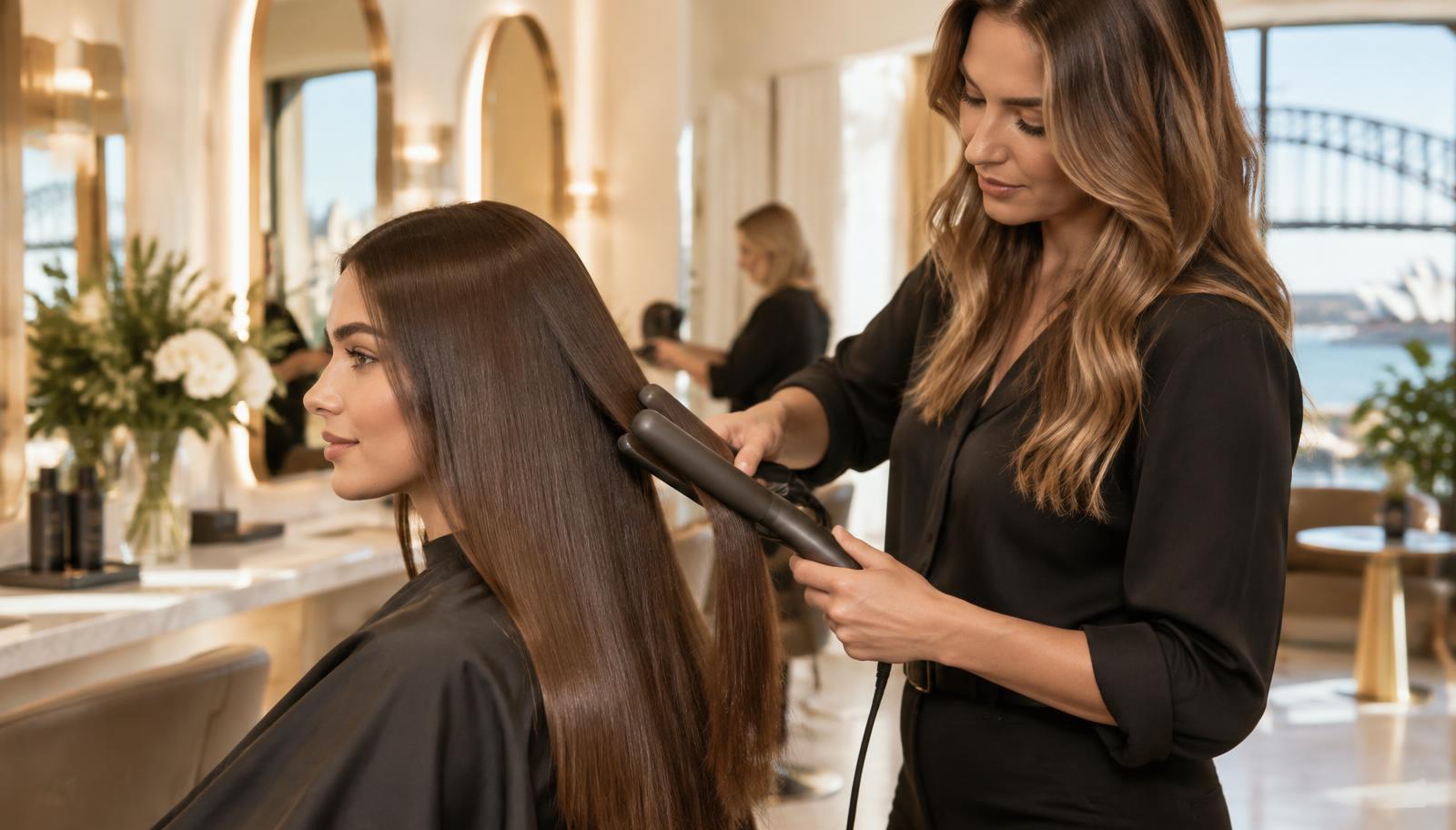
- Thermal sealing with the flat iron, at the temperature and passes set by the manual
- Cool, stabilise and prescribe low-sulphate home care
Safety and compliance in Australia
In 2010–2011 the ACCC and NICNAS surveyed formaldehyde in cosmetics and the ACCC acted against hair straightening products marketed as “formaldehyde-free” that tested far above safe limits. The lesson for Australian salons is clear: rely on the safety data sheet and full ingredient list, not packaging claims.
Internationally, the WHO’s IARC classifies formaldehyde as a Group 1 carcinogen, and the U.S. FDA and OSHA warn that some smoothing products release formaldehyde when heated. Choosing a formaldehyde-free, documented professional line protects your clients, your team and your salon’s reputation.
Why straightening is the most profitable service on the menu
Professional straightening is a long, high-value appointment with a natural rebooking cycle every three to six months and an obvious home-care sale at the end of every visit. Explain what the price covers — diagnosis, full processing time, correct thermal sealing and a result that lasts months — and clients rarely push back.
How do you turn a consultation into a clear service brief?
A useful straightening consultation ends with a written description of the finish, maintenance routine and appointment scope. Start by asking what the client wants to change on an ordinary working morning: time spent blow-drying, expansion around the hairline, inconsistent waves or difficulty keeping the lengths manageable. These answers are more useful than a request for perfectly straight hair without further discussion.
Ask the client to describe their hair after air-drying and after their usual styling routine. Record previous smoothing, permanent straightening, lightening, colour changes and home treatments, including approximate dates and any uncertainty. Photographs can help establish the starting point, but they cannot replace examining the hair in person. Check the nape, crown, hairline and ends separately rather than treating the head as one uniform surface.
Translate the conversation into practical expectations: whether movement is welcome, whether the client wants to continue wearing curls and how much styling they are prepared to do. Explain that nanoplasty and keratin are names used within the same professional smoothing category, not a promise of different performance levels. Finish with an agreed brief, a provisional quote and any assessment needed before confirming the booking.
What should a strand test tell the stylist?
A strand test should help determine whether the proposed service is appropriate and whether its intended finish is realistic. Select hair that represents the areas of greatest concern, not simply the easiest hidden section to reach. A relatively strong nape strand may tell you little about heavily lightened lengths around the face or a porous band left by previous colour work.
Record where each test strand came from, the visible chemical history and how the hair behaves before and after the test. Assess the dried result as well as the wet fibre. Look at manageability, colour appearance, consistency along the strand and whether the proposed finish meets the consultation brief. If different areas behave differently, record that variation rather than averaging it into a single judgement.
For exact product quantities, preparation, processing, rinsing, drying, temperature and passes, follow the Vitta Gold Education Manual. Do not build a replacement protocol from general advice online. Where the history is unclear or the test does not support proceeding, defer the appointment and explain what needs reviewing. A documented decision not to treat can be just as professional as a completed service.
How should porosity and previous colour shape the appointment?
Porosity and previous colour should shape the assessment, booking allowance and expectations before application begins. A client may have natural regrowth, regularly coloured mid-lengths and heavily lightened ends on the same head. Map those zones during consultation so the stylist understands where the hair differs and does not assume that a consistent visible shade means a consistent treatment history.
Ask specifically about highlights, balayage, colour removers, overlapping bleach and colour applied at home. Examine the ends without relying on how smooth they look under styling products. Discuss the possibility that the colour appearance may change through a smoothing appointment, and agree how that would affect the client's preferred shade. Avoid promising that a photograph of someone else's blonde establishes the likely outcome.
Coordinate future colour work with the relevant professional guidance rather than offering a universal waiting period. Follow the Vitta Gold Education Manual for the smoothing protocol and obtain appropriate guidance for the planned colour service. Where the hair is not suitable, offer a separate consultation or maintenance appointment instead. The aim is a coherent service plan, not fitting every requested transformation into one visit.
Can curly clients request manageability without a pin-straight brief?
Curly clients can request improved manageability without choosing a pin-straight styling goal, but the consultation must acknowledge that smoothing can change their curl pattern. Ask how the client wears their hair most often and whether retaining curl shape matters more than reducing volume. Do not interpret every concern about frizz as permission to remove the appearance of texture.
Use the client's own photographs to discuss acceptable movement, volume and definition. A polished blow-dry photograph does not show how treated hair will look after washing and air-drying, so explain that distinction clearly. Examine differences between the crown, temples and underneath sections, where patterns and density may vary. Establish whether the client would still be happy if their existing curls became looser.
Use the strand test and the Vitta Gold Education Manual to decide whether the requested outcome is supportable. Do not improvise a curl-preserving protocol by arbitrarily reducing time or changing heat. If maintaining the exact natural pattern is essential, explain the limits of a chemical smoothing service and discuss styling or home-care alternatives. Clear consent begins with the desired everyday result, not only the salon finish.
How do section size and team organisation improve consistency?
Consistent sectioning and clearly assigned responsibilities make a long straightening appointment easier to control. Section size should allow even distribution, close observation and the precise handling required by the prescribed protocol. Dense hair often needs more working sections than fine hair of the same length, so length alone is a poor guide to the labour involved.
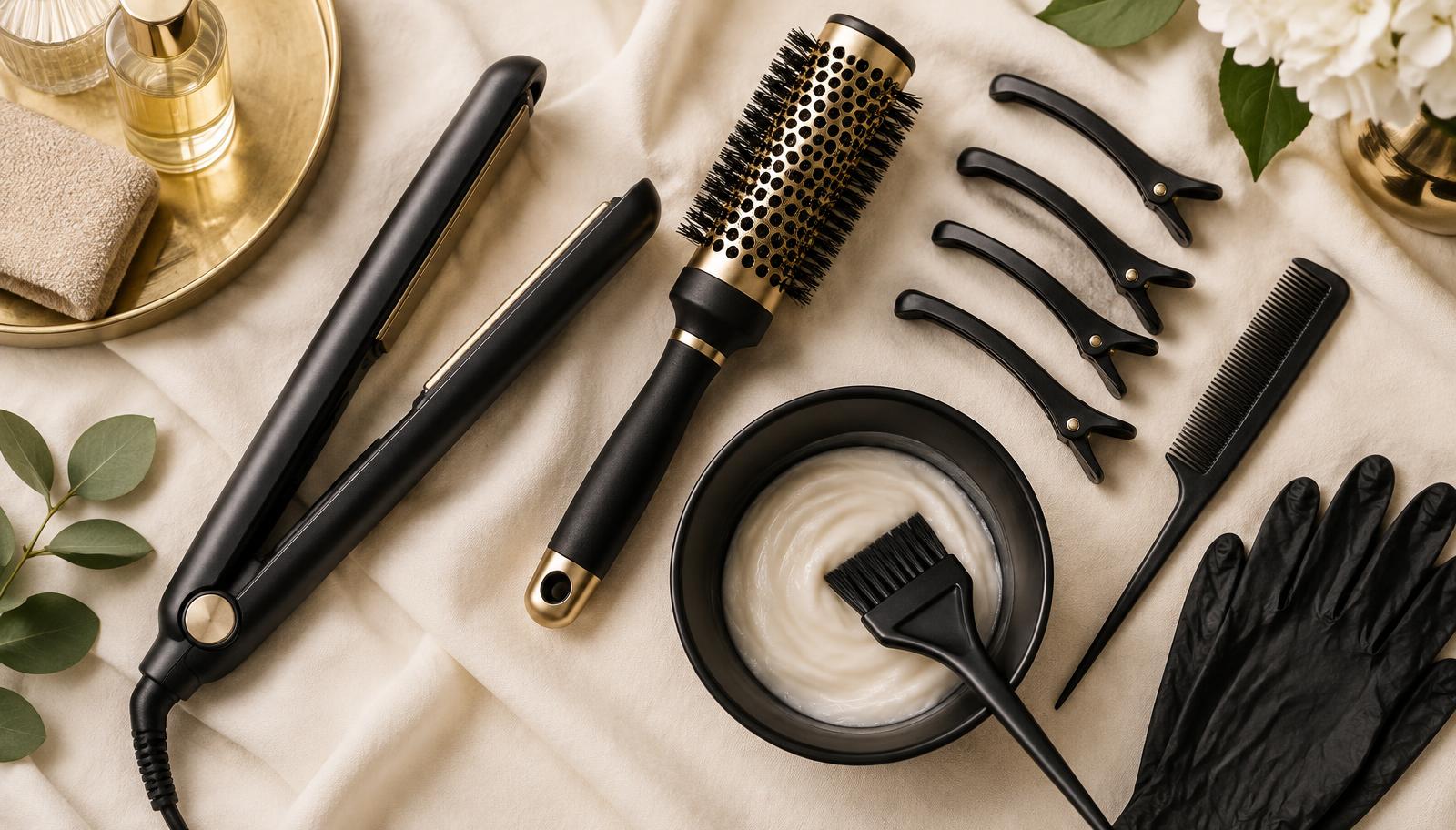
Before starting, prepare clean tools, clips, suitable measuring equipment and the client record. Agree who is responsible for timing, application notes and each subsequent stage. If an assistant joins the appointment, explain the mapped areas and the assessment findings before they touch the hair. A handover should include what has been completed and what remains, rather than an assumption that the next person can infer it.
Follow the Vitta Gold Education Manual for exact sectioning requirements, product handling and thermal work. Do not compensate for an overloaded diary with thicker sections or rushed distribution. Allow room in the booking for the consultation, preparation, finishing and home-care explanation as well as the technical work. A repeatable process helps the salon identify where extra time is needed without turning speed into the main measure of quality.
How can salons build a transparent straightening menu in AUD?
A transparent straightening menu prices the assessed work rather than relying only on a photograph or hair length. As an illustrative planning range, an Australian salon might test AUD $250–$450 for a less complex appointment and AUD $450–$750 or more for long, dense or technically demanding hair. These are indicative menu examples, not verified market averages, guaranteed charges or earnings forecasts.
Calculate your own figures from product usage, paid labour, appointment time, overheads and the margin required to operate sustainably. Include consultation and finishing time in that calculation. Explain whether a separate assessment fee is credited towards the service, what home care costs and whether an unusually complex history requires another visit. The confirmed price should be agreed before the technical service starts.
Avoid using a low starting price that rarely reflects the appointments you actually accept. Instead, publish understandable criteria for a tailored quote, such as density, length and previous chemical work. Sydney and Melbourne salons may have different operating costs from businesses in Adelaide or Hobart, but postcode alone does not determine the right price. Review actual appointment records before changing your menu or introducing a premium.
How should Australian weather and swimming change the aftercare conversation?
Australian aftercare advice should reflect the client's actual exposure to humidity, swimming and sunlight. Ask about commuting, outdoor work, exercise and holidays rather than assuming every client has the same routine. Humidity in Sydney and Brisbane can influence daily styling expectations, while clients in the Gold Coast or Darwin may describe frequent swimming alongside persistent humid conditions.
Recommend suitable low-sulphate home care and explain how to use the chosen products according to their directions. Chlorine and salt water deserve a practical conversation: wetting the hair with fresh water before swimming, using a suitable swim cap where practical and rinsing afterwards can become part of a manageable routine. Follow relevant product guidance rather than promising that any routine makes treated hair unaffected by pool or ocean exposure.
Discuss hats and shade for extended UV exposure, especially for clients concerned about colour appearance. Perth beachgoers, outdoor workers in Adelaide and holiday travellers from Canberra or Hobart may all need the same practical planning. Do not suggest climate determines a fixed treatment lifespan. Results are typically three to six months, with individual variation according to hair, service execution, washing and ongoing care.
What should a useful review and rebooking system include?
A useful review system compares the client's everyday experience with the original consultation brief. Record the products used, batch details, assessment findings and relevant protocol notes at the appointment. With permission, take photographs using consistent lighting and angles. Note whether the final images show a blow-dried finish, because that context matters when reviewing later photographs of air-dried hair.
Invite the client to contact the salon after they have followed the prescribed first-wash guidance and experienced their normal routine. Ask specific questions about brushing, drying time, movement and the areas they originally found difficult. If the result seems uneven, revisit the service record, home-care routine and chemical history before suggesting another technical service. Do not use extra heat or immediate repeat treatment as an automatic response.
Plan rebooking around reassessment rather than an inflexible calendar reminder. Although results are typically three to six months, regrowth, retained smoothing through the lengths and changes in colour plans can affect the next appointment. A client returning after a beach holiday may need a different discussion from someone returning with fresh highlights. Use each review to refine the next brief, not simply repeat the previous booking.
Sourcing professional straightening in Australia
In Australia, Vitta Gold professional products are supplied by Elasta, our official local partner: salons can open a professional account, talk to the team on live chat and order with local stock and delivery.
Frequently asked questions
What is the best professional hair straightening treatment?
The best treatment is the one matched to the hair at diagnosis. A formaldehyde-free nanoplasty-type realignment suits most hair types because the finish can be adjusted from 100% straight to natural movement.
Is nanoplasty the same as keratin?
They belong to the same category — professional chemical hair smoothing. The names are commercial; the actives, raw materials and protocol are what make the difference.
How long does professional hair straightening last?
Typically three to six months, depending on hair type, how the service was performed and the client’s home care.
Where can Australian salons buy professional straightening products?
Vitta Gold is supplied in Australia by Elasta, with professional accounts, live chat support and local stock.
Can I quote a straightening appointment from a photograph?
A photograph can support an indicative estimate, but it cannot establish porosity, density throughout the head or previous chemical history. Confirm the price after consultation and any necessary strand testing. Explain the factors that could change the estimate before the client reserves a long appointment.
Should every stylist use identical section widths?
Not necessarily. Working sections must suit the hair's density and the prescribed technique. Follow the Vitta Gold Education Manual for exact protocol rather than adopting one universal width. Record the approach so another stylist can understand the appointment without guessing how each area was handled.
What if the client cannot remember their previous treatment?
Treat the history as uncertain rather than assuming compatibility. Ask when it was performed, whether any records are available and which areas remain on the hair. Assess representative strands and seek technical guidance. Defer the booking when the information and test results do not support proceeding.
Should home care be included in the quoted price?
It can be included or priced separately, provided the arrangement is clear before booking. Explain why suitable low-sulphate home care is recommended and show the full cost. Avoid presenting essential maintenance information only at checkout, when the client has already committed to the service.
Can clients skip blow-drying after professional straightening?
Their preferred routine should be discussed before treatment. An air-dried result may look different from the salon's polished finish, and individual hair can still need styling. Demonstrate a realistic home routine and explain the relevant aftercare instructions without promising completely maintenance-free hair.
References & further reading
- Vitta Gold Academy — Nanoplastia vs keratin vs hair botox: what actually differs
- Vitta Gold Academy — What is Nanoplastia? The complete guide for hair professionals
- Vitta Gold Academy — Hair smoothing treatments compared
- ACCC Product Safety Australia — ‘Brazilian Blowout “formaldehyde-free” representations likely to mislead’ (2011)
- ACCC & NICNAS — Research survey of formaldehyde in cosmetics, final report (2010)
- World Health Organization, IARC — List of classifications (formaldehyde, Group 1)
- U.S. Food & Drug Administration — Hair smoothing products that release formaldehyde when heated
- U.S. OSHA — Hair salons: facts about formaldehyde in hair smoothing products
- Gavazzoni Dias MF. Hair cosmetics: an overview. International Journal of Trichology, 2015 (PMC4387693)